
Home Inspection Guide: Deal-Breakers vs. Negotiable Repairs
Don't let a home inspection report overwhelm you. Learn how to distinguish between serious structural red flags and minor cosmetic fixes to negotiate better.
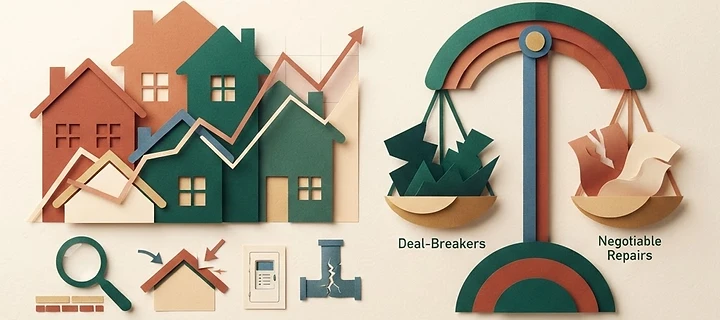
A professional home inspection is your primary tool for identifying non-negotiable structural failures versus routine maintenance items that do not threaten your financial security. While major issues like foundation cracks, active water intrusion, or obsolete electrical wiring warrant a walk-away or significant price reduction, cosmetic flaws like worn carpet or outdated fixtures are expected in any pre-owned home and should not derail your purchase. Focus your energy on the expensive systems that impact your long-term return on investment.
The True Purpose of a Home Inspection
The goal of this process is not to find a "perfect" house, because no property is perfect. The report is meant to provide a transparent look at the capital expenditures—CapEx—you will face in the next five to ten years. By understanding the condition of the home’s "bones," you can cross-reference these findings with broader economic data. You can run a free ZIP analysis to see how the neighborhood's historical price growth compares to the potential cost of these repairs. If the market is stagnant, a house with significant deferred maintenance is a much higher risk than one in a high-demand, appreciating area.
Identifying the Real Deal-Breakers
When reviewing the report, categorize every finding into "Safety," "Functionality," or "Aesthetics." Deal-breakers belong in the first two categories. These are issues that pose an immediate risk to the building's integrity or the inhabitants' safety.
- Foundation Issues: Look for stair-step cracking in brickwork or significant unevenness in flooring.
- Roofing Failures: Signs of active leaks, missing shingles, or a roof that has reached the end of its life cycle (typically 20-30 years).
- Electrical Hazards: Look for "knob-and-tube" wiring or ungrounded systems that are outdated and fire-prone.
- HVAC Infrastructure: While a furnace might be old, a cracked heat exchanger is a safety emergency that requires immediate replacement.
The Math of Repair Costs: A Worked Example
Let’s look at a scenario to understand how inspection results affect your bottom line.
Example: You are looking at a property in a ZIP where the median household income (from Census ACS data) is $75,000. The home inspection reveals a 20-year-old HVAC system that is functioning but inefficient, and a roof that needs replacement within two years.
- Cost of new roof: $12,000
- Cost of new HVAC: $8,000
- Total immediate CapEx: $20,000
If you use Areal to compare this property’s rent-vs-buy metrics against other homes in the area, you might find that the rent premium in this ZIP code is high enough to justify the investment. If the $20,000 repair cost pushes your total cost of ownership above the local HUD Fair Market Rent levels for a 3-bedroom unit, you are essentially overpaying for the property. Use these numbers to request a credit or a price reduction from the seller.
Cosmetic Flaws: Why They Shouldn't Scare You
Many first-time buyers become emotional when they see a 50-page inspection report filled with "deficiencies." Keep in mind that a home inspector is obligated to report on everything, including a sticky cabinet door or a missing light switch plate. These are not reasons to cancel a contract. In fact, if the seller is willing to lower the price to account for these minor items, you end up with the ability to renovate the property to your own taste using your own contractors. This is how many successful buyers build equity—by buying the "ugly" house in a good neighborhood and performing cosmetic updates that add actual market value.
How to Use the Report in Negotiation
Negotiating after an inspection is about leverage and risk management. Do not send the entire inspection report to the seller; it is overwhelming and often insulting. Instead, create a clean, concise list of "high-priority safety and structural issues." Be specific: "The inspection identified a failing electrical panel that requires replacement for fire safety. We request a $3,000 credit toward this repair." This objective, professional approach is more likely to yield results than complaining about the age of the appliances. If you want to see if your local market supports these types of upgrades, browse city rental market reports to see how renovated homes compare to non-renovated ones in your target city.
Verifying Property Metrics in Your ZIP
Data is your best defense against bad real estate decisions. Before you finalize your offer, you should always check the macro-level indicators for your specific ZIP code. FHFA indices show whether home prices in your area are trending up or down. If the local market is softening, you have more leverage to ask the seller to pay for the repairs identified in your inspection. Visit the Areal blog for guides on how to interpret this data, or simply input your target ZIP code to visualize the intersection of income, rent, and local housing supply.
Frequently asked questions
Should I always attend the home inspection?
Yes, you should attend the final hour of the inspection to walk through the property with the professional. This allows you to ask clarifying questions about which issues are critical safety hazards versus minor cosmetic maintenance items.
Can I back out of a contract based on an inspection report?
Most standard residential purchase agreements contain an inspection contingency that allows you to cancel the contract if you are dissatisfied with the findings. You must follow the specific deadlines outlined in your purchase contract to protect your earnest money deposit.
Does the seller have to fix everything on the list?
The seller is not legally required to fix anything unless a specific safety issue violates local code or loan requirements. Most negotiations result in either a price reduction or a seller concession for closing costs to cover the repairs.
Are home inspectors liable for missed issues?
Most home inspection contracts contain liability limitations that cap the inspector's financial responsibility at the cost of the inspection fee. They are visual observers and cannot see behind walls or beneath finished surfaces, so you should always budget for unexpected repairs.
Put the method to work
Run a free ZIP-level market screen on Areal — home value and rent trends, HUD fair market rent, county income, crime, and an estimated cash flow, with every source shown.
Run a free analysis