
Budgeting for Utilities: The Costs Renters Often Forget to Add Up
Don't get caught off guard by move-in costs. Learn how to calculate your utilities budget effectively and determine the true total cost of any rental property.
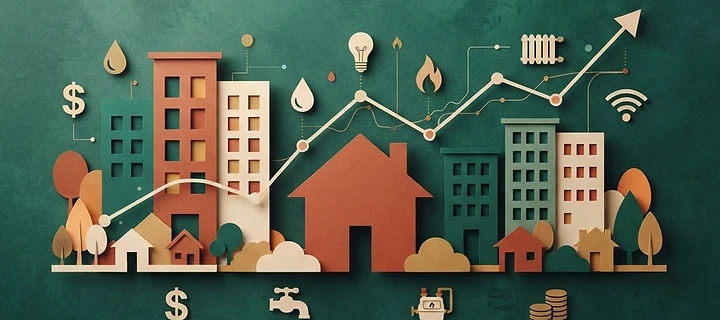
A responsible utilities budget should account for 15% to 25% of your total monthly housing expenditure, covering electricity, water, gas, and waste management. You can determine your actual costs by averaging seasonal fluctuations in energy demand based on your regional climate and local provider rates before you sign a lease. Failing to account for these recurring expenses often leads to significant monthly cash flow shortages for new tenants.
Why Your Utilities Budget Matters
Many renters fall into the trap of looking only at the base rent when determining affordability. While tools like HUD Fair Market Rent provide a baseline for what a landlord can charge, these figures rarely include the "hidden" costs of maintenance, heating, and cooling. When you assess a property, your primary goal is to determine the total cost of ownership—or in this case, the total cost of occupancy. If you ignore the variables that influence your energy consumption, you risk overextending your finances during peak summer or winter months.
Factors Influencing Your Energy Costs
Several physical and environmental factors dictate your monthly utility bill. Insulation quality, window efficiency, and the age of the HVAC system play major roles in how much electricity or gas you consume. Climate is the most significant external driver; residents in regions with extreme heat or cold will naturally experience higher "peak" utility months. Furthermore, newer high-density housing units often provide better thermal retention compared to older detached homes, which can lead to lower energy bills despite higher base rent costs. Use AreaMetrics to run a free ZIP analysis of your target area to see how regional cost trends align with your financial goals.
How to Calculate Your Total Monthly Utility Load
To build an accurate budget, you must break down your utility load into fixed and variable components. Fixed costs, such as water, sewer, and trash, are often bundled with your monthly invoice. Variable costs, specifically heating and cooling, represent the bulk of your exposure.
The Calculation Framework
- Identify all utility providers for the target ZIP code.
- Inquire with local neighbors or the current tenant about their "worst-case" summer and winter monthly bills.
- Add 10% to that amount to account for potential rate hikes and seasonal adjustments.
Example: Calculating the Budget Suppose you are eyeing a 1,000-square-foot apartment. Your neighbors report that in the mildest months (spring/fall), utilities cost $150. In the dead of summer, they spike to $300 due to air conditioning. To play it safe, you use the peak $300 figure. Adding a 10% buffer for rate fluctuations ($30), your target utilities budget becomes $330 per month. If your rent is $1,500, you are actually paying $1,830. This process ensures you are not "rent poor" before the first utility bill even arrives.
Checking Specific Regional Trends
Utility costs are rarely uniform across a city. While you can browse city rental market reports to get an idea of broad housing trends, specific neighborhood utilities can vary based on local infrastructure and municipal utility providers. When reviewing a property, check if the building is connected to natural gas or if it is fully electric. In many parts of the country, natural gas remains significantly cheaper for water heating and furnace operation. You can often verify the local utility landscape by checking the city’s official public works website or looking at recent Census ACS data for information on typical housing characteristics in your preferred area.
Incorporating Utilities into Your Long-Term Savings
If you find that your potential utilities budget is consistently pushing your rent-to-income ratio above 30%, it is time to reconsider the location. High utility costs are effectively a hidden rent increase. By factoring these numbers in early, you gain the clarity needed to make a sustainable housing choice. If you are unsure where to start, feel free to visit the AreaMetrics blog for more tips on evaluating market conditions. Whether you are looking at Houston rental market or a smaller suburban town, understanding these nuances is essential for long-term housing stability.
Frequently asked questions
What utilities are typically paid by the tenant?
In most standard rental agreements, tenants are responsible for electricity, heating, cooling, and internet. Some landlords include water, sewer, and trash collection in the rent, but this is entirely dependent on the specific lease and local municipal practices.
How do I find out what the utility costs are for a specific apartment?
You should always ask the property manager or current tenant for a representative "average" bill from both the summer and winter seasons. If they cannot provide this, contact the local utility providers directly and request an estimate based on the property's square footage and age.
Does my utilities budget need to change annually?
Yes, you should review your utilities budget at least once a year because utility rates typically rise in accordance with local inflation. Additionally, seasonal weather patterns can shift, meaning a "mild" winter one year might turn into a record-breaking cold snap the next.
Should I prioritize rent price or utility efficiency?
If two properties have similar total monthly costs, you should almost always prioritize the unit with better insulation and energy-efficient appliances. Higher energy efficiency not only keeps your monthly budget predictable but also protects you from drastic price spikes during extreme weather months.
Put the method to work
Run a free ZIP-level market screen on Areal — home value and rent trends, HUD fair market rent, county income, crime, and an estimated cash flow, with every source shown.
Run a free analysis