
Are Turnkey Rental Properties Worth the Premium in 2026?
Are turnkey rental properties worth the premium? We evaluate the math behind buying finished rentals versus value-add deals to help you invest smarter.
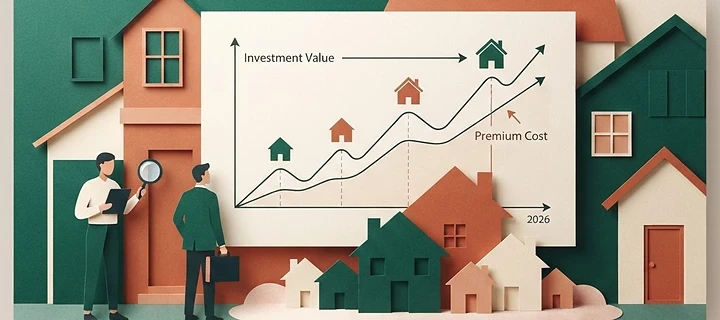
Turnkey rental properties are generally not worth the premium for investors seeking maximum cash-on-cash returns, but they serve as an effective vehicle for those prioritizing passive income and reduced management friction. While buying a ready-to-rent property saves on immediate capital expenditure and renovation stress, the price markup often compresses your cap rate to a point where your long-term equity growth lags behind "value-add" strategies. For the buy-and-hold investor, the decision rests on whether the time saved on renovations outweighs the higher cost of entry.
The Economics of Turnkey Rental Properties
When you purchase a property labeled as "turnkey," you are paying a premium that covers three distinct costs: the physical renovation, the marketing/leasing effort to place a tenant, and the convenience fee charged by the provider. In a competitive market, these providers often buy distressed assets, perform light cosmetic updates, and hold them for a short window.
From a purely mathematical standpoint, you are trading upside potential for certainty. If you buy a fixer-upper, your return on investment is driven by the delta between your total cost basis (purchase price plus repairs) and the post-renovation appraised value. With turnkey homes, that equity "buffer" is already realized by the seller, not the buyer. Investors who use Areal to compare the projected rental income against current market housing prices often find that turnkey properties struggle to meet the "1% rule" in many high-demand U.S. metropolitan areas.
Crunching the Numbers: A Worked Example
To determine if a premium is justified, you must look at your expected cap rate. Let’s look at a hypothetical scenario in a mid-sized U.S. city where the median house price is $250,000.
The Scenario
- Turnkey Price: $275,000 (includes premium)
- Monthly Rent (based on HUD Fair Market Rent): $2,200
- Operating Expenses (Property management, tax, insurance, maintenance): $900/month
- Annual NOI: ($2,200 - $900) * 12 = $15,600
In this example, your cap rate is $15,600 / $275,000, which is approximately 5.67%. If you were to buy a similar property in disrepair for $200,000 and spend $50,000 on renovations, your total basis would be $250,000. Assuming the same rent, your cap rate would be 6.24%. That difference in cap rate, compounded over ten years, represents a significant gap in wealth accumulation. Before signing, use Areal to verify if the HUD-supported rental projections in your target ZIP code align with the provider's advertised "pro-forma" income.
Assessing the Risks of Finished Rentals
The primary risk with turnkey rentals is the "hidden" quality issue. Because the renovation is performed by the seller, they are incentivized to prioritize aesthetic appeal over structural integrity or long-term durability. Often, cheap finishes are used to make the home "photo-ready" for listing sites, while the underlying systems—HVAC, plumbing, and roof—may be nearing the end of their functional life.
Before you invest, cross-reference the local Census ACS data regarding the age of housing stock in that specific ZIP. If the neighborhood average home age is 40+ years, but the turnkey property has no record of major system replacement, you are likely looking at a high-maintenance future. When you browse city rental market reports, look specifically for trends in "Days on Market" to ensure the rent the provider promises is actually supported by recent leasing velocity in that specific neighborhood.
Using Data to Validate Turnkey Claims
Never rely on the seller's "pro-forma" (projected) numbers. Instead, utilize public data to perform your own underwriting.
- Check Local Rent: Use HUD Fair Market Rent data for the specific county to ensure the projected rent isn't inflated.
- Verify Income Trends: Use Census ACS income data to ensure the local tenant pool can actually afford the rent you intend to charge.
- Confirm Tax Assessment: Check the public property records to see if the taxes listed on the seller's sheet match the reality of the tax assessor's office.
Many investors find that once they pull the true property tax data and verify local rent, the "guaranteed" cash flow on a turnkey property shrinks significantly. If you are exploring the Houston rental market or any other major hub, the Areal blog provides consistent guidance on how to strip away marketing fluff and focus on the raw data that dictates actual investor success.
Frequently Asked Questions
Do turnkey rental properties include the cost of tenant placement?
Usually, yes, the premium you pay includes the marketing and screening of the first tenant. However, you should confirm if the provider manages the property after the first lease term expires or if you are on your own for future turnovers.
Can I use FHA or conventional financing on turnkey rentals?
Yes, since these properties are typically fully renovated and habitable, they qualify for standard mortgage products. This is a major advantage over distressed properties that may not meet the safety requirements for traditional government-backed loans.
Are the rental income projections on turnkey sites reliable?
They are often optimistic and may not account for local vacancy rates or the nuances of specific ZIP codes. Always verify these numbers against independent public datasets before committing your capital.
How does the location of a turnkey property affect my risk?
Turnkey providers often operate in lower-cost, high-yield areas that may experience slower appreciation or higher tenant turnover. Investors should weigh the immediate cash flow against the long-term desirability of the neighborhood using regional demographic trends.
Put the method to work
Run a free ZIP-level market screen on Areal — home value and rent trends, HUD fair market rent, county income, crime, and an estimated cash flow, with every source shown.
Run a free analysis